Showing posts with label Foreign Policy. Show all posts

Wednesday, May 28, 2008

The Space Age


The 1960’s was also known as the Space Age. After the Soviet Union launched the first satellite called Sputnik, the United States felt threatened by their superior technology. In response, Kennedy funded NASA( The National Aeronautics and Space Administration.) "I believe that this nation should commit itself to achieving the goal, before this decade is out, of landing a man on the Moon and returning him safely to the Earth" Kennedy said in a 1961 speech. Thus, the 60's evolved into a race between the US and the USSR , as to who could land a man on the moon first. The American Apollo 11 became the first space shuttle to land on the moon, fulfilling Kennedy’s dream.

Tuesday, May 27, 2008

The Assassination of Ngo Dinh Diem

After the incident in Saigon, the killing and arrests of many Buddhist bonzes, and the arrests of 4,000 students from Saigon University, the Kennedy Administration was looking to support a new South Vietnamese government. In Early November, a military group led by General Duong Van Minh held a U.S.-backed coup and overthrew Diem, killing both him and his brother, Ngo Dinh Nhu. On November 2, 1963, the Ngo Dinh’s were taken into custody and killed at point blank range. Many believed that this crisis would lead to American withdrawal of involvement in Vietnam, but 20 days later, Kennedy was shot, leaving Johnson to decide the rest of American policy, in which he called for further participation in Vietnam.

The Peace Corps

The Peace Corps was first proposed by Presidential candidate John F. Kennedy on October 14, 1960 at the University of Michigan, Ann Arbor. On March 1, 1961, the plan was signed off by JFK. By July, locations had been found (Ghana, Tanzania, Colombia, the Philippines, Chile, and St. Lucia). On September 22, Congress approved the legislation and authorization of the Peace Corps. By 1963, the Peace Corps had extended to 44 countries. In 1966, the Peace Corps had over 15,000 field workers.

Gulf of Tonkin Resolution

The main result of the Gulf of Tonkin incident was the Gulf of Tonkin Resolution, made by the United States’ Congress. It states that the U.S. can and will take all measures to combat the spread of Communism in Indochina (namely Vietnam, Cambodia, and Laos). Under Section 3, it basically proclaims the judgment of security in Southeast Asia exclusively to be that of the President’s, leaving the excuse for long term U.S. involvement in Vietnam. Many critics believe that the Tonkin incident was a setup to allow the U.S. government to make a statement like this and gain a motive to military involvement. Read the actual document.

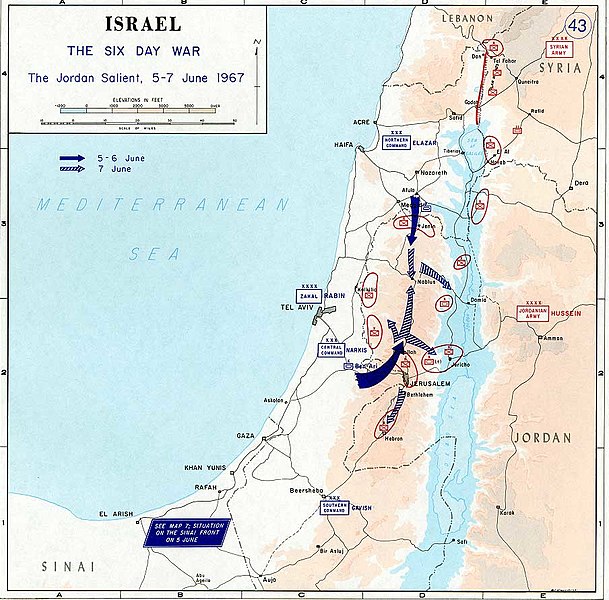
The Six-Day War


The U.S. became involved in the Middle East in the 50’s; after the Iraqi revolution, the U.S. had slightly fluctuating relationships with surrounding countries. In 1962, President Nasser (Egypt) sent troops to fight the Saudi Arabians, who the U.S. backed. In 1963, the U.S. sent aid to Israel in the form of weapons. Johnson withdrew Egyptian aid, allowing the Egyptians to shift further into the Soviet arms. The call for American involvement was also supported by the U.S. statement of 1956 that declared that any Egyptian blockage of the straight of Tiran would be regarded as an act of war. On May 22, 1967, the Egyptians finally made this move. Johnson warns the Israelites not to attack first, but while the Syrians, Egyptians, and Jordanians were moving into position, Israel and the U.S. struck, claiming ultimate victory, albeit shaky.
More interesting and in-depth info can be found here and here.

Lyndon B. Johnson

Johnson’s new policies were the ultimate invasion of private rights. After his landslide election in 1964, which he won mostly because of the aftermath of Kennedy’s fame, Johnson became the butt-end of many political critics and voters. The passing of the Civil Rights act of 1964 banned racial discrimination in privately owned public places. This placed more power in Federal hands to instill the act, while limiting free speech and rights of owners. It also paved way for the federal Equal Employment Opportunity Commission, which had the effect of limiting discrimination in job hiring through the tactic of Affirmative action. In 1965, Johnson made an executive order enforcing affirmative action in all federal contracting—meeting quotas became mandatory.

Although in the election of 1964 Lyndon won a landslide (mostly due to a warmongering portrayal of opposition Goldwater), Johnson himself ended up to be a butcher of young American boys, prompting anti-war cries of “LBJ, LBJ, how many boys did you kill today?” Johnson used the Gulf of Tonkin incident to send air raids over the North Vietnamese and promote further deployment of troops to Vietnam. Johnson’s political ideals could easily be summed up in the following: Limiting State rights and promoting the growth of Federal government, Great Society, Civil Rights, and greater military involvement. By the next election in 1968, Johnson had managed to decimate all political support he had—Johnson was not even in the running for the Democratic primary.

Cuban Missile Crisis

In October of 1962, aerial photographs were taken over Cuba. They exposed the transportation of nuclear missiles from the U.S.S.R. to Cuba, where America would be in firing range. Kennedy refused the bombing of the missile sites. On the 22nd of October, Kennedy placed a naval blockade on Cuba, which would be moved on the circumstance of the removal of the nuclear warheads. Also, should any attack occur, Kennedy stated that the U.S. would retaliate by firing nuclear missiles at Russia, from the Turkish base sites under American control. The soviets placed a naval ring surrounding the U.S. quarantine, yet no shots were fired for fear of nuclear destruction of the world’s top leading countries. On the 28th, the U.S. and Soviets reached an agreement: the removal of nuclear weapons in both Turkey and Cuba. Perhaps one of the most tense moments of the sixties, the event ultimately gave Kennedy more popular support, as well as spurned scares and parodies in popular culture, such as the 1964 film, Dr. Strangelove Or: How I Learned to Stop Worrying and Love the Bomb.

Bay of Pigs

Eisenhower had already set up the take-down of Fidel Castro using CIA agents. Kennedy wanted no direct intervention, and instead provided arms and supplies for the anti-Castro rebels (1200 exiles). The attack proved a dismal failure, as Kennedy refused to supply crucial support to the uprising. In the end, all of the exiles were captured or killed, and the U.S. paid a ransom of 62 million in pharmaceuticals and other supplies to the Cuban government. This attack proved nothing and deterred the Cubans even more forcefully to the Soviet side.

Latin America and the United States

In 1961, Kennedy presented the Alliance for Progress for Latin American Nations (Alianza para el Progreso). It was equated to the European Marshall Plan, and had the intent of closing the class gap in South America. The aid did little though, and most of it was absorbed into the pockets of Latin American leaders.

Trade Expansion Act

Passed in 1962, and heavily promoted by the young president, JFK, this act enabled tariff cuts of up to 50% for Common Market (also known as European Union) countries. This was started by massive western European economic recovery due to the Marshall Plan. The main opposition to this act, which bolstered trans-Atlantic ties, was by Charles De Gaulle, Prime minister of France. De Gaulle feared the growing international power of the U.S., and felt threatened by the strong ties between America and Britain.

Cuba and Communism

In 1959, Fidel Castro had finally garnered a victory in his rebellion against Fulgencio Batista, the former leader. Castro began seizing American held land and redistributing it. The U.S> then cut off heavy importation of Cuban sugar and other resources (cobalt, nickel, iron ore, chromium, copper, salt, timber, silica, petroleum, and arable land). This led to more seizure of land by Castro’s new dictatorship. The United States finally broke diplomatic relations in 1961 and in the same year, placed a lasting embargo on Cuban products. As Cuba backslid towards communism, building ties with other communist countries, tensions between the U.S. and Cuba grew, leading to the Cuban Missile Crisis and continuing on to the present.
Find the present-day CIA dossier on Cuba by clicking here.

Monday, May 19, 2008

Gulf of Tonkin Crisis


On August 2 and 4, 1964, the first real involvement in the Vietnam area by U.S. troops occurred. Under the Desoto operation, which was meant to collect intelligence on North Vietnamese actions and VietCong association, the U.S.S. Maddox was stationed in the Gulf of Tonkin. PTF's (fast patrol boats supplied to the Republic of Vietnam by the U.S. Navy) had fired upon targets south of the Maddox's stationed area. The reason for original fire is still unknown.  Apparently, the North Vietnamese then launched torpedoes toward the Destroyer, the Maddox. The U.S. action was originally meant to dissuade North Vietnamese leader Ho Chi Minh from supporting the guerillas of the VietCong. The Maddox escaped the initial attack due to air support provided by F-8's from the U.S.S. Ticonderoga. On August 4th, a similar conflict occured yet again. In response to these multiple attacks, Johnson ordered carriers to attack North Vietnamese oil storage facilities. 30 enemy naval vessels were sunk.
Johnson's statement to the public can be viewed here
And more primary and secondary resources can be found here