A powerful chemical was released by the military, called herbicide. It was nicknamed Agent Orange. This chemical was dropped over Vietnam. It would kill forests that Viet Cong resistance was hiding in. However, it had horrible unknown side affects. The chemical contains dioxide that gives cancer. Many Vietnamese and Vietnam veterans suffered as a result.
Showing posts with label Military Conflict. Show all posts
Wednesday, May 28, 2008
Agent Orange
A powerful chemical was released by the military, called herbicide. It was nicknamed Agent Orange. This chemical was dropped over Vietnam. It would kill forests that Viet Cong resistance was hiding in. However, it had horrible unknown side affects. The chemical contains dioxide that gives cancer. Many Vietnamese and Vietnam veterans suffered as a result.
The Vietnam War and Conflicts in Vietnam
The Vietnam War was due largely impart to a feeling of competition between the US and the USSR. The Democratic Republic of Vietnam had friendly relations with China and the USSR. They all recognized each other diplomatically. To counter, the US recognized the French puppet government in Vietnam. The Military Assistance and Advisory Group aided the French in 1950, and by 1954 US had spent over a billion dollars to aid the French. After the battle of Dien Bien Phu, The Viet Minh forces greatly suppressed French forces as the French were defeated. France withdrew from Indochina.
After France left, the Viet Minh set up a socialist government under the oppressive rule of Ngo Dinh Diem. Ho Chi Minh created a land reform program and won support of most of the population. Vietnam split into Communist North and Democratic South. Ho Chi Minh made his zone Communist in order to receive aid from the Soviet Union. An election was supposed to take place at the Geneva Conference. Because the United States knew Ho Chi Minh would win, US refused to sign the Geneva agreement. The Domino Theory was what made the US join the war. They believed that if they fought communism from spreading in Asia, they would not have to fight it in their homeland.
The National Liberation Front of South Vietnam, also known as the Viet Cong, supported Ho Chi Minh and fought South Vietnam and the Americans using guerilla warfare. The US used napalm and Agent Orange to burn the Viet Cong out of the forest. Another problem was that Viet Cong hid in South Vietnam towns, so soldiers could not distinguish them from ordinary Vietnamese. Kennedy’s plan was to win support of the people, that way the Viet Cong would have nowhere to hide.
Diem was an extremely corrupt and oppressive leader. He was most known for his intolerance of Buddhists. Several Buddhists publicly burned themselves to protest him. The United States assassinated him and brought other leaders to power. However, each leader proved to be more corrupt than the last.
Johnson had been leading secret attacks in North Vietnam. The Maddox was there reporting on them. After alleged attacks on the Maddox, Johnson won support of Congress to escalate the war. However, he lied to the people about why the Maddox was there in the first place. This was called the Gulf of Tonkin Resolution.
A major turning point in the war was the Tet Offensive. During Tet, a major holiday of Vietnam, there was a temporary truce. However, the Viet Cong secretly smuggled weapons and attacked cities during this time. From a military point of view, the US was successful. However, this greatly damaged American morale because there were many American deaths. The war lost much support throughout the country.
When Nixon was inaugurated, he installed a policy of “Vietnamization.” This was to gradually let South Vietnam fight their own war and withdraw American troops. However, all American troops were not pulled out until 1973.
After France left, the Viet Minh set up a socialist government under the oppressive rule of Ngo Dinh Diem. Ho Chi Minh created a land reform program and won support of most of the population. Vietnam split into Communist North and Democratic South. Ho Chi Minh made his zone Communist in order to receive aid from the Soviet Union. An election was supposed to take place at the Geneva Conference. Because the United States knew Ho Chi Minh would win, US refused to sign the Geneva agreement. The Domino Theory was what made the US join the war. They believed that if they fought communism from spreading in Asia, they would not have to fight it in their homeland.

The National Liberation Front of South Vietnam, also known as the Viet Cong, supported Ho Chi Minh and fought South Vietnam and the Americans using guerilla warfare. The US used napalm and Agent Orange to burn the Viet Cong out of the forest. Another problem was that Viet Cong hid in South Vietnam towns, so soldiers could not distinguish them from ordinary Vietnamese. Kennedy’s plan was to win support of the people, that way the Viet Cong would have nowhere to hide.
Diem was an extremely corrupt and oppressive leader. He was most known for his intolerance of Buddhists. Several Buddhists publicly burned themselves to protest him. The United States assassinated him and brought other leaders to power. However, each leader proved to be more corrupt than the last.
Johnson had been leading secret attacks in North Vietnam. The Maddox was there reporting on them. After alleged attacks on the Maddox, Johnson won support of Congress to escalate the war. However, he lied to the people about why the Maddox was there in the first place. This was called the Gulf of Tonkin Resolution.
A major turning point in the war was the Tet Offensive. During Tet, a major holiday of Vietnam, there was a temporary truce. However, the Viet Cong secretly smuggled weapons and attacked cities during this time. From a military point of view, the US was successful. However, this greatly damaged American morale because there were many American deaths. The war lost much support throughout the country.
When Nixon was inaugurated, he installed a policy of “Vietnamization.” This was to gradually let South Vietnam fight their own war and withdraw American troops. However, all American troops were not pulled out until 1973.
Tuesday, May 27, 2008
The Assassination of Ngo Dinh Diem
After the incident in Saigon, the killing and arrests of many Buddhist bonzes, and the arrests of 4,000 students from Saigon University, the Kennedy Administration was looking to support a new South Vietnamese government. In Early November, a military group led by General Duong Van Minh held a U.S.-backed coup and overthrew Diem, killing both him and his brother, Ngo Dinh Nhu. On November 2, 1963, the Ngo Dinh’s were taken into custody and killed at point blank range. Many believed that this crisis would lead to American withdrawal of involvement in Vietnam, but 20 days later, Kennedy was shot, leaving Johnson to decide the rest of American policy, in which he called for further participation in Vietnam.
Labels:
Foreign Policy,
Military Conflict,
Politics
Gulf of Tonkin Resolution
The main result of the Gulf of Tonkin incident was the Gulf of Tonkin Resolution, made by the United States’ Congress. It states that the U.S. can and will take all measures to combat the spread of Communism in Indochina (namely Vietnam, Cambodia, and Laos). Under Section 3, it basically proclaims the judgment of security in Southeast Asia exclusively to be that of the President’s, leaving the excuse for long term U.S. involvement in Vietnam. Many critics believe that the Tonkin incident was a setup to allow the U.S. government to make a statement like this and gain a motive to military involvement. Read the actual document.
Labels:
Foreign Policy,
Legislature,
Military Conflict,
Politics
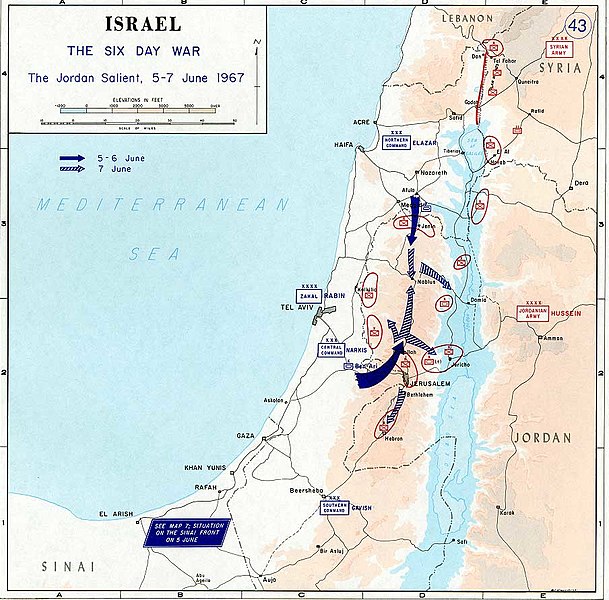
The Six-Day War
The U.S. became involved in the Middle East in the 50’s; after the Iraqi revolution, the U.S. had slightly fluctuating relationships with surrounding countries. In 1962, President Nasser (Egypt) sent troops to fight the Saudi Arabians, who the U.S. backed. In 1963, the U.S. sent aid to Israel in the form of weapons. Johnson withdrew Egyptian aid, allowing the Egyptians to shift further into the Soviet arms. The call for American involvement was also supported by the U.S. statement of 1956 that declared that any Egyptian blockage of the straight of Tiran would be regarded as an act of war. On May 22, 1967, the Egyptians finally made this move. Johnson warns the Israelites not to attack first, but while the Syrians, Egyptians, and Jordanians were moving into position, Israel and the U.S. struck, claiming ultimate victory, albeit shaky.
More interesting and in-depth info can be found here and here.
Labels:
Communism,
Foreign Policy,
Military Conflict,
Politics
Cuban Missile Crisis
In October of 1962, aerial photographs were taken over Cuba. They exposed the transportation of nuclear missiles from the U.S.S.R. to Cuba, where America would be in firing range. Kennedy refused the bombing of the missile sites. On the 22nd of October, Kennedy placed a naval blockade on Cuba, which would be moved on the circumstance of the removal of the nuclear warheads. Also, should any attack occur, Kennedy stated that the U.S. would retaliate by firing nuclear missiles at Russia, from the Turkish base sites under American control. The soviets placed a naval ring surrounding the U.S. quarantine, yet no shots were fired for fear of nuclear destruction of the world’s top leading countries. On the 28th, the U.S. and Soviets reached an agreement: the removal of nuclear weapons in both Turkey and Cuba. Perhaps one of the most tense moments of the sixties, the event ultimately gave Kennedy more popular support, as well as spurned scares and parodies in popular culture, such as the 1964 film, Dr. Strangelove Or: How I Learned to Stop Worrying and Love the Bomb.
Labels:
Communism,
Foreign Policy,
Military Conflict,
Politics
Bay of Pigs
Eisenhower had already set up the take-down of Fidel Castro using CIA agents. Kennedy wanted no direct intervention, and instead provided arms and supplies for the anti-Castro rebels (1200 exiles). The attack proved a dismal failure, as Kennedy
refused to supply crucial support to the uprising. In the end, all of the exiles were captured or killed, and the U.S. paid a ransom of 62 million in pharmaceuticals and other supplies to the Cuban government. This attack proved nothing and deterred the Cubans even more forcefully to the Soviet side.
Labels:
Communism,
Foreign Policy,
Military Conflict,
Politics
Monday, May 19, 2008
Gulf of Tonkin Crisis
On August 2 and 4, 1964, the first real involvement in the Vietnam area by U.S. troops occurred. Under the Desoto operation, which was meant to collect intelligence on North Vietnamese actions and VietCong association, the U.S.S. Maddox was stationed in the Gulf of Tonkin. PTF's (fast patrol boats supplied to the Republic of Vietnam by the U.S. Navy) had fired upon targets south of the Maddox's stationed area. The reason for original fire is still unknown.
Johnson's statement to the public can be viewed here
And more primary and secondary resources can be found here
Labels:
Foreign Policy,
Military Conflict,
Politics
Subscribe to:
Posts (Atom)